












Super games typically involve fast-paced action and precise control inputs to achieve high scores. Players often navigate through obstacle courses while collecting items and avoiding hazards. The genre emphasizes reflexes and pattern recognition over complex narratives. A core element is mastering movement for speed run games performance.
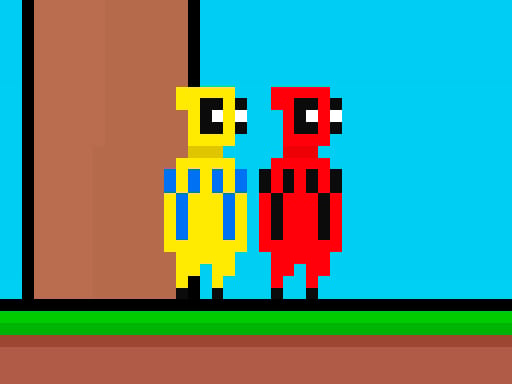
Immediately perform jumps, collect items, and avoid obstacles while maintaining momentum through the stage. Use precise inputs to navigate platforms and reach the exit point. The goal is to complete the course as fast as possible. This defines the core loop for platformer games.
Players traverse linear or nonlinear environments, collecting power-ups and avoiding hazards to progress. The loop involves repeated attempts to optimize routes and execution for faster completion times. Success relies on memorizing layouts and reacting quickly to enemy patterns. This structure is fundamental for action games and arcade games.
Focus on consistent movement and timing for reliable results. Practice specific sections to improve execution and reduce errors. Use collected items strategically to assist in difficult sections. Remember that patience leads to better outcomes in retro games.
Q: What controls are used? A: Inputs typically involve directional movement and action buttons for jumping and interacting.
Q: What is the main objective? A: The primary goal is to complete stages efficiently, often aiming for the fastest time.
Q: Are there specific power-ups? A: Power-ups like speed boosts or invincibility are common but vary by title.
Q: How does the core mechanic work? A: The mechanic involves platform navigation and hazard avoidance to reach a goal.